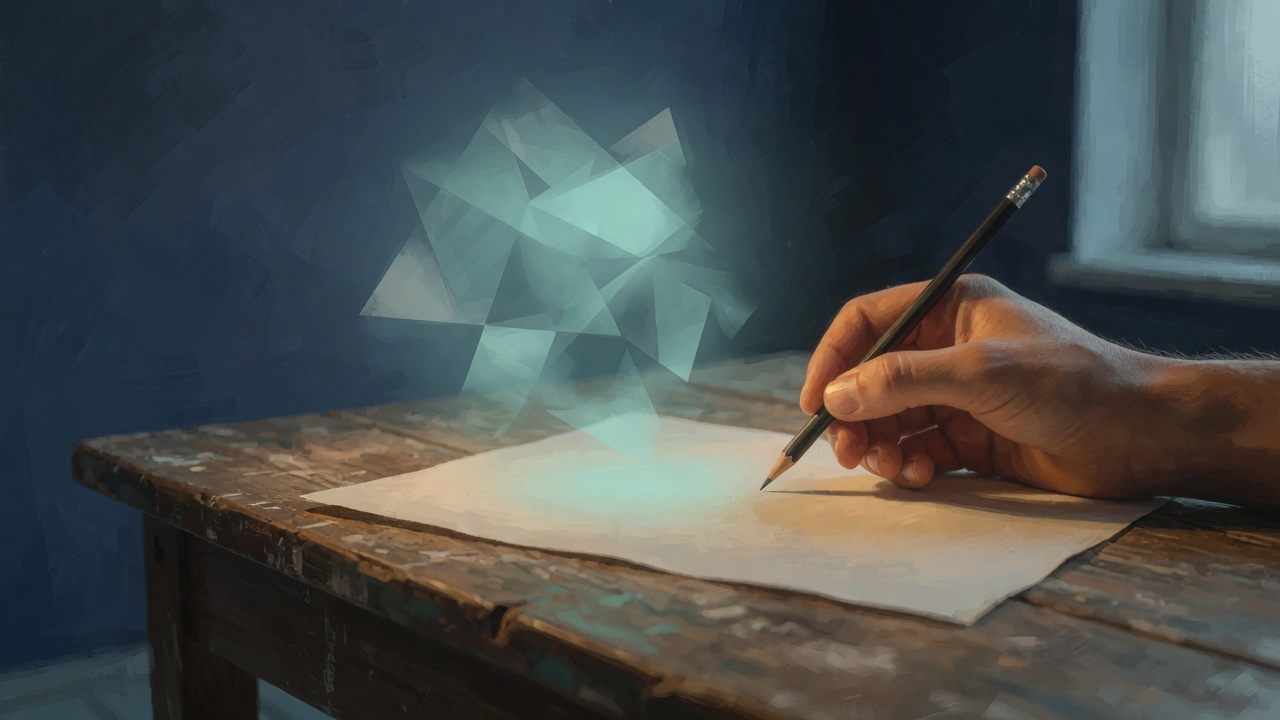
Creativity in an AI-Driven World
Posted on June 25, 2025
Creativity in an AI-Driven World: Redefining What It Means to Create
In 2025, a single person with an AI tool can create what once required an entire Hollywood studio. But does this make them more creative—or less human? As artificial intelligence reshapes every corner of our digital landscape, we're forced to confront a fundamental question: What does it truly mean to be creative in an age of machines?
Understanding True Creativity
What if creativity isn't about talent—but about breaking boundaries?
Psychologist Mihaly Csikszentmihalyi offers a provocative definition in his groundbreaking book Creativity:
- "Creativity is any act, idea, or product that changes an existing domain, or that transforms an existing domain into a new one. A creative person is someone whose thoughts or actions change a domain, or establish a new domain. However, a domain cannot be changed without the explicit or implicit consent of a field responsible for it."
This isn't about having artistic talent or being "naturally creative." It's about pushing boundaries and reshaping how we think about entire fields of knowledge.
Consider what this means:
- The domain = the established rules, conventions, and knowledge in any field
- The field = the gatekeepers, experts, and community who validate what counts
- Creativity = successfully challenging these boundaries in ways others recognize as valuable
The Double-Edged Sword of Boundaries
Here's the paradox: The same boundaries that help us communicate and understand the world also trap us in conventional thinking.
We love to classify, categorize, and create definitions. It helps us make sense of complexity and communicate with others. But these mental boxes can become creative prisons:
- "That's not how music is supposed to sound"
- "Art doesn't work that way"
- "We've always done business like this"
What if the most creative act is questioning these assumptions entirely?
The first step toward breakthrough creativity is experimenting with boundaries—not just accepting them, but actively testing their limits. Anyone can do this, but here's the catch: true creative impact only happens when the relevant community recognizes and accepts your boundary-breaking work.
AI: The Great Creative Democratizer
And now we arrive at artificial intelligence—the ultimate game-changer.
In my years working in technology, I've never witnessed change happening this rapidly. AI isn't just another tool; it's fundamentally reshaping who gets to be creative and how.
The Old Creative Economy
- Music production: Required expensive studios, sound engineers, producers
- Film creation: Needed cameras, actors, directors, editors, massive budgets
- Software development: Demanded years of coding expertise
- Visual design: Required expensive software mastery and artistic training
The New AI-Powered Reality
- Music: Generate complete compositions with Suno or AIVA in minutes
- Video: Create cinematic content using RunwayML or Pika Labs
- Code: Transform natural language into functioning software with GitHub Copilot
- Art: Produce gallery-worthy visuals with Midjourney or DALL-E
The barriers have crumbled. You don't need the studio, the team, the years of training, or the massive budget. Entire creative processes that once required armies of specialists can now be handled by AI agents.
The Creativity Paradox: Enhancement or Replacement?
This raises an uncomfortable question: Are we witnessing the democratization of creativity—or its commoditization?
Yes, it's scary. Entire industries face disruption. Traditional creative roles are being automated away. But here's the thing—there's no stopping this technological tide.
Instead of fighting it, the creative opportunity lies in this question: What remains uniquely human in an AI-driven creative landscape?
The answer might be our ability to:
- Ask better questions that AI can help us explore
- Curate and combine AI outputs in meaningful ways
- Provide context and meaning that resonates with human experience
- Push creative boundaries faster than ever before
The Creative AI Enhancement Framework
Ready to harness AI for breakthrough creativity? Here's your action plan:
1. Identify Your Creative Domain
- What field interests you most?
- What boundaries in that domain frustrate you?
- Where do you see opportunities for transformation?
2. Master the Right AI Tools
- Visual Creation: Midjourney, DALL-E, Stable Diffusion
- Music & Audio: Suno, AIVA, ElevenLabs
- Video Production: RunwayML, Pika Labs, Luma Dream Machine
- Writing & Content: Claude, GPT-4, Jasper
- Code & Development: GitHub Copilot, Cursor, v0
3. Set Boundary-Breaking Challenges
Don't just use AI to replicate existing work. Ask:
- "What would be impossible without AI?"
- "How can I combine domains that have never been connected?"
- "What would the experts in this field say is 'impossible'?"
4. Iterate and Collaborate
Think of AI as your creative partner, not your replacement:
- Generate multiple variations
- Combine different AI outputs
- Refine and iterate based on your creative vision
5. Seek Recognition and Impact
Remember Csikszentmihalyi's definition—creativity requires community validation:
- Share your work within relevant creative communities
- Seek feedback from domain experts
- Document your creative process
- Build a body of work that demonstrates boundary-pushing innovation
The Choice Is Yours
What if the next breakthrough in your field comes from someone with no traditional training but powerful AI tools?
The question isn't whether AI will change creativity—it already has. The question is: Will you use these tools to expand the boundaries of what's possible, or will you watch from the sidelines as others redefine your domain?
The creative revolution is happening now. The tools are democratically available. The only question left is: What will you create?